Words · 괜찮아요 · 11 min read
괜찮아요: the most confusing 'it's fine' in Korean
No thanks. I'm okay. Don't worry about it. Please offer again. Not fine at all. How one Korean word covers every one of these, how tone and context tell them apart, what 괜찮아? means between friends, and what to say back.
You’re at a Korean friend’s family home. Dinner is over. You have eaten two bowls of rice, a mountain of japchae and something you are fairly sure was the family’s entire supply of galbi. Your friend’s mother appears with a plate of peeled pears.
“이것 좀 먹어.” (“Have some of this.”)
“아, 괜찮아요!” you say, patting your stomach. (“Oh, I’m fine!”)
She nods, disappears, and comes back with the pears and a bowl of grapes.
Meanwhile, your phone buzzes. A friend you had to cancel on tonight has replied to your apology: “괜찮아.” Just that. No emoji, no ㅋㅋ, not even a period. Is she fine? Is she furious? Should you send flowers?
Welcome to 괜찮아요 (gwaen-cha-na-yo), the Swiss Army knife of Korean. It means “no thanks”. It means “I’m okay”. It means “it’s alright”, “don’t worry about it”, “pretty good”, “that works for me”, and, in the right tone at the wrong moment, “I am absolutely not fine and you should know that.” Same word. Same four syllables. Your job is to work out which one you just got.
The short version: 괜찮아요 literally means something like “it’s okay / no problem”. To decode it, look at what came before it (an offer, an apology, a question about your health) and how it was said (bright and quick, or flat and slow). With food and favors from elders, a first 괜찮아요 is often politeness, so a second offer is normal. Between friends, “괜찮아?” (“You okay?”) is real concern, and a short, flat “괜찮아” in reply may mean “ask me one more time.” When in doubt, ask once more, gently.
What the dictionary says (and why that’s not enough)
The Standard Korean Language Dictionary gives 괜찮다 just two senses. Sense one: “별로 나쁘지 않고 보통 이상이다”, “not particularly bad; above average.” Sense two: “탈이나 문제, 걱정이 되거나 꺼릴 것이 없다”, “there is nothing to cause trouble, problems or worry.”
That’s it. Two neat definitions. Real life has produced at least seven more, and none of them came with a manual.
The polite 괜찮아요 is the everyday form for strangers, shop staff, colleagues and elders. 괜찮아 (gwaen-cha-na) is the casual banmal version for friends, family and anyone younger. 괜찮습니다 (gwaen-chan-seum-ni-da) is the stiff, formal one you hear from soldiers, new employees and anybody apologizing on live TV. And 괜찮으세요? (gwaen-cha-neu-se-yo) is the honorific question: “Are you alright?”
The many faces of 괜찮아요
Here is the full menu. Note how often the exact same word shows up in the left column.
| What you hear | The situation | What it usually means |
|---|---|---|
| 괜찮아요! (bright, quick, small hand wave) | A cashier asks if you need a bag | “No thanks.” |
| 괜찮아요, 괜찮아요 (doubled, smiling) | An elder offers more food | “Thank you, please don’t trouble yourself.” Often an opening bid. |
| 괜찮아요 (warm, after a pause) | You apologize for bumping into someone | “It’s alright, no harm done.” |
| 괜찮아요? (rising, concerned) | You trip on the subway stairs | “Are you hurt?” |
| 괜찮아요 (with a nod) | “Is 7 o’clock okay?” | “That works for me.” |
| 괜찮네요 (eyebrows up, slow nod) | Tasting your cooking | “This is actually good.” |
| 그 사람 괜찮더라 | A friend describing a blind date | “They were genuinely nice. Possibly a second date.” |
| 괜찮아. (flat, short, eyes on phone) | After you forgot their birthday | “It is not okay.” |
Let’s walk through the big ones.
1. “No thanks”: the convenience-store reflex
This is the one you’ll use fifty times a week. At the convenience store: “봉투 필요하세요?” (“Do you need a bag?”) “아니요, 괜찮아요.” At a café: “영수증 드릴까요?” (“Would you like the receipt?”) “괜찮아요.” When a street flyer is pushed toward you, a light “괜찮아요” and a small hand wave does the job.
This 괜찮아요 is quick, bright and done. Nobody will offer the bag a second time. The cashier has 30 more customers and no interest in modesty theater.
2. “I’m okay”: the hair-salon chorus
Anyone who has had their hair washed at a Korean salon knows this one intimately. “물 온도 괜찮으세요?” (“Is the water temperature okay?”) “불편한 데 없으세요?” (“Anything uncomfortable?”) Your answer, from beneath a towel, every single time: “네, 괜찮아요.”
It’s also what you say when someone asks after you: after a cough, a stumble, a long day. Here 괜찮아요 is honest and simple. You’re fine. Mostly. Probably.
3. “It’s alright / don’t worry about it”: the apology catcher
Someone steps on your foot in a packed subway car at 8:40 a.m. “아, 죄송합니다!” You: “괜찮아요.” Somebody spills a little water on your table. “괜찮아요, 괜찮아요.” A colleague apologizes for a late reply. “괜찮습니다!”
This is the forgiving 괜찮아요, and it is one of the kindest things in the language. It closes the incident and tells the other person they can stop bowing.
4. “Not bad at all”: the understated rave
Sense one from the dictionary, “above average”, is where Korean understatement lives. When a Korean tries your homemade kimchi stew and says, slowly, “오, 괜찮은데?” (“Oh, this is pretty good?”), take the compliment. That rising -은데? at the end signals real surprise.
And when a friend comes back from a set-up and reports “괜찮더라” (“They were alright”), in the language of matchmaking that is a strong result. “괜찮은 사람” (a decent, good person) is one of the most sincere recommendations one Korean can give about another.
5. “Please offer again”: the first refusal of food
This is the one from the opening scene, and the one that causes the most trouble.
In many Korean homes, especially with older hosts, offering food is a small ritual of care, and refusing the first offer is a small ritual of politeness. The guest says “괜찮아요”, the host offers again, and the guest accepts on the second or third round. Some hosts worry that taking your first “I’m fine” at face value would look stingy. Some guests worry that accepting instantly would look greedy. So both sides perform a polite little dance, like two people trying to go through a door at the same time. We cover the wider pattern in why Koreans rarely say no directly.
Say / Mean: 아, 괜찮아요~ (light, smiling, hand half-raised) when offered food usually means “That’s kind, you don’t have to.” Expect a second offer, and it’s fine to accept it with 그럼 조금만 주세요 (“Then just a little, please”). 아니에요, 진짜 괜찮아요. 너무 배불러요 (“No, really, I’m fine. I’m so full”), said while sliding the plate gently back, is a real no.
Be warned: in some grandmothers’ houses, even the real no is treated as a negotiating position. You may say “진짜 괜찮아요” three times and still find a peeled apple quietly placed in front of you. At that point, the polite move is to eat one slice. Resistance is futile and the apple is delicious.
The same pattern runs the other way, too. If you are the host and a Korean guest refuses your coffee once, offer again. You’re not being pushy. You’re giving them permission.
6. “Not fine at all”: the dangerous 괜찮아
And now the one every Korean dreads receiving.
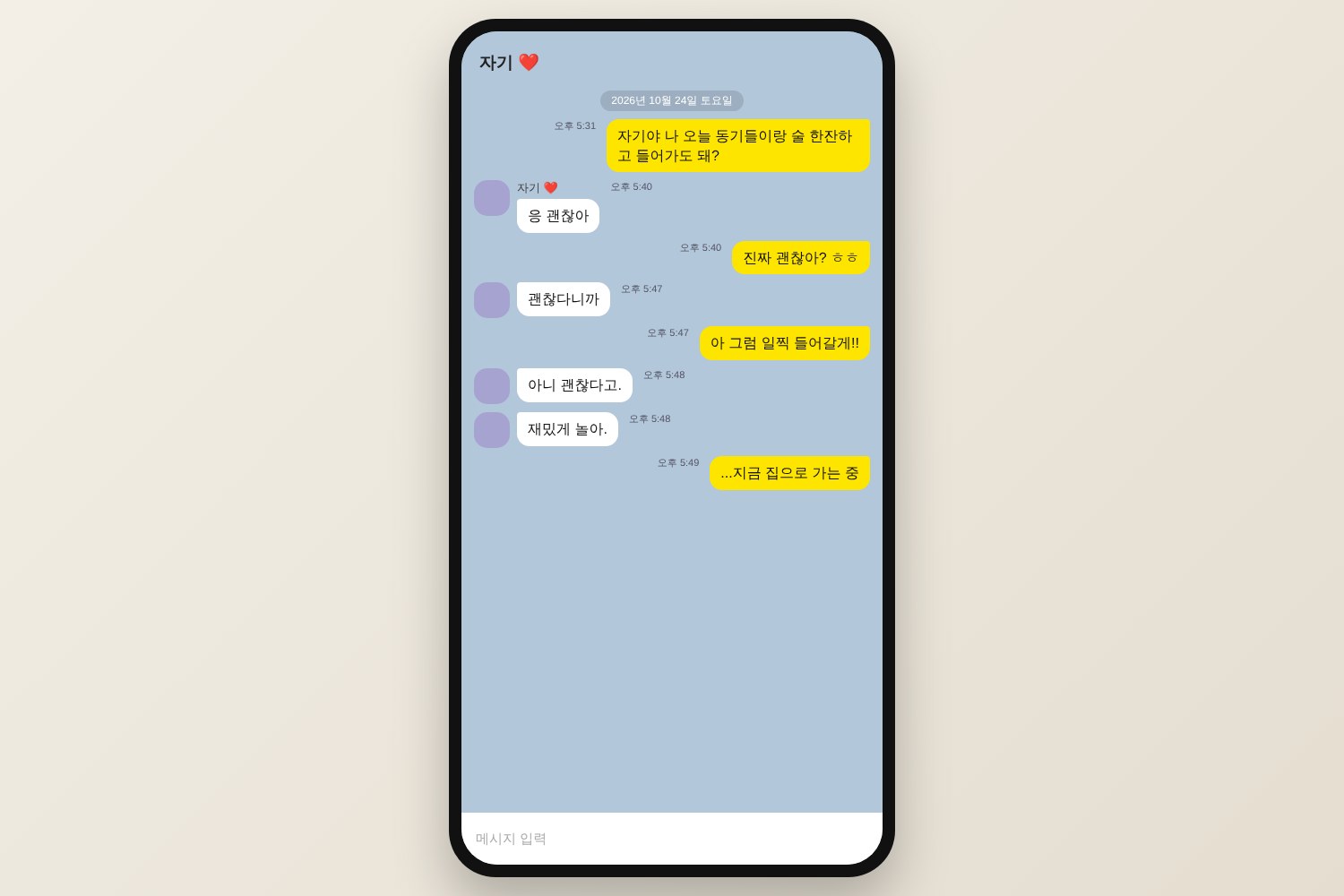
Picture the scene. You promised to call last night. You fell asleep. This morning you open KakaoTalk to see your message, “미안해 ㅠㅠ 어제 잠들었어” (“Sorry ㅠㅠ I fell asleep yesterday”), marked as read. Twenty minutes later: “괜찮아.”
The words say fine. Everything else says otherwise. The tells:
- Speed. An instant “괜찮아 ㅋㅋ” is relaxed. A reply after a long pause, once the read receipt has done its quiet work, is not.
- Decoration. Koreans text with ㅋㅋ, ㅎㅎ, ~, emoticons and stickers. A bare “괜찮아” with nothing attached is the text equivalent of a cold shoulder. A “괜찮아.” with a period is practically a closing argument.
- Length. If the other person usually sends three bubbles and today sends one, notice.
- The follow-up. “괜찮아. 신경 쓰지 마.” (“It’s fine. Don’t worry about it.”) usually means you should, in fact, worry about it a little.
In person, the tells are tone (flat, low), eye contact (none) and the length of the silence afterward. Koreans have an entire genre of couple memes about this exact moment: the girlfriend or boyfriend who says “괜찮아” while every visible sign says the opposite, and the partner frantically trying to read the room. It’s the Korean cousin of the English “I’m fine.” We touch on it in our guide to dating a Korean girlfriend, but honestly, it is unisex and works on every relationship, including mothers.
Speaking of mothers: every Korean knows the parental version. “엄마는 괜찮아” (“Mom’s fine”) is what a Korean mother says while carrying four bags of groceries up the stairs, while refusing the last piece of fish, and while telling you not to bother coming home for Chuseok. It is love dressed as self-sacrifice, and it is almost never the whole story.
괜찮아?: what it means between friends
Flip it into a question and 괜찮아? becomes one of the warmest words in Korean.
“괜찮아?” (“You okay?”) is what a friend sends after hearing about your breakup, your failed interview, your bad day at work. It’s what your partner texts from across the room during a tense family dinner. It’s short, it’s casual, and it says I noticed, and I’m here.
Between close friends it often comes in a little bundle:
- “괜찮아? 밥은 먹었어?” (“You okay? Have you eaten?”) The food question is part of the care package.
- “괜찮아? 무슨 일 있어?” (“You okay? Did something happen?”)
- “괜찮아… 괜찮아.” (Said softly, often with a pat on the back.) Here it isn’t a question at all. It means “It’s okay, it’s going to be okay,” the verbal version of a hug.
That last one is so central to how Koreans comfort each other that it has ended up in drama titles more than once: SBS’s 괜찮아, 사랑이야 (It’s Okay, That’s Love, 2014) and tvN’s 사이코지만 괜찮아 (It’s Okay to Not Be Okay, 2020) both put the word right up front, and both were about characters who were very much not okay. Korean viewers did not need the irony explained.
How to answer 괜찮아?
Here’s the thing: Koreans tend to answer “응, 괜찮아” (“Yeah, I’m fine”) on autopilot, even when they aren’t. So a good friend often asks twice. The second ask is the real one.
Say / Mean: 진짜 괜찮아? (jin-jja gwaen-cha-na) means “Are you really okay?” It gives the other person permission to drop the polite answer. Pair it with 말하고 싶으면 말해 (“Tell me if you want to talk”) and then wait. If they still say they’re fine, believe them, and maybe show up later with snacks.
And when someone asks you:
- Actually fine: “응, 괜찮아! 고마워” (“Yeah, I’m fine! Thanks.”) Add a ㅎㅎ in text so it doesn’t sound cold.
- Not fine, but don’t want to talk: “그냥 좀 피곤해” (“I’m just a bit tired”) is a gentle, honest middle ground.
- Not fine, and you want to talk: “사실 안 괜찮아” (“Honestly, I’m not okay”) is a strong, clear signal. Koreans will take it seriously, because saying it out loud breaks the autopilot.
Where the word came from
The dictionary traces 괜찮다 to a contraction of 괜하지 아니하다. The first piece, 괜하다, means “without any reason or substance” (it’s the same root as 괜히, “for no reason”, as in “괜히 왔다”, “I shouldn’t have come”). Literally, then, 괜찮다 is built from something like “it is not for nothing.”
How “not for nothing” became “fine” isn’t obvious, and Korean language columnists have fun pointing out that the word is a much heavier contraction than it looks. But the shape of it fits the way Koreans use it: 괜찮아요 doesn’t say “this is great.” It says “there’s no problem here worth mentioning.” It is a word built for understatement, which is exactly why it can stretch to cover everything from “no thanks” to “I’m quietly devastated.”
Why one word does so much work
Korean is a language where a lot of meaning lives outside the words: in tone, in timing, in the relationship between speaker and listener. This is the skill Koreans call nunchi, and 괜찮아요 might be its daily training exercise.
A flat “no” can feel blunt in Korean, especially to an elder or someone offering kindness. 괜찮아요 lets you decline without rejecting the person. You’re not saying “I don’t want your pears.” You’re saying “There’s no need. I’m already well taken care of.” That softness is the point. The cost is that the listener has to work out the rest.
The good news is that younger Koreans, especially among friends, are often more direct than their parents’ generation. A friend your age offering you the last dumpling usually means it, and “괜찮아” usually means “no thanks” and nothing more. The ritual double-offer lives on mostly with elders, in-laws, and first visits.
How to handle 괜찮아요: a practical guide
When you hear it:
- Check the situation first. An offer? An apology? A question about health? That tells you which 괜찮아요 you’re dealing with.
- Then check the tone. Bright and quick is usually literal. Slow, flat or delayed means look closer.
- With food from elders, offer twice. If the second answer is still a firm “진짜 괜찮아요”, stop. A real no deserves respect.
- With friends and partners, ask once more. “진짜 괜찮아?” costs you nothing and can save an evening.
- Don’t ask five times. One follow-up is caring. Five is an interrogation.
When you say it:
- To decline at a shop or café: “괜찮아요” with a small smile and a hand wave. Done.
- To decline food from an elder, and actually mean it: add a reason. “너무 배불러요, 정말 잘 먹었어요” (“I’m so full, I really enjoyed it.”) The reason makes it a real no; the thanks keeps it warm.
- To accept after a polite refusal: “그럼 조금만요” (“Just a little, then”).
- To forgive an apology: “괜찮아요, 신경 쓰지 마세요” (“It’s fine, please don’t worry about it”).
- To comfort someone: just “괜찮아, 괜찮아”, said softly. You don’t need more.
Common mistakes:
- Taking every first 괜찮아요 literally when an elder is offering food or help. You may leave a host feeling they failed to look after you.
- Taking every 괜찮아요 as a hidden yes. At the convenience store, the person does not secretly want the bag.
- Replying to a flat “괜찮아” with “Great!” That’s how a small problem becomes a longer conversation.
- Saying a bare “괜찮아” yourself in text when you mean it kindly. Add ㅎㅎ or an emoji, or it may land colder than you intend.
Once you’ve got the hang of it, you’ll start hearing the differences everywhere: the bright “괜찮아요!” at the counter, the doubled “괜찮아요, 괜찮아요” at the dinner table, the soft “괜찮아” on a friend’s shoulder. Same word, a dozen meanings, and a whole country quietly reading between the syllables. You’ll get it wrong sometimes. That’s okay. Really. 괜찮아요.