Work · 칼퇴 · 11 min read
칼퇴: leaving work on time in Korea, the 52-hour week and the MZ generation
What 칼퇴 (leaving exactly on time) means, the old rule of never leaving before the boss, how 야근 culture grew, the 52-hour cap, the 2023 '69-hour week' backlash, quiet quitting, the AirPods debate, and the 4.5-day week pilots.
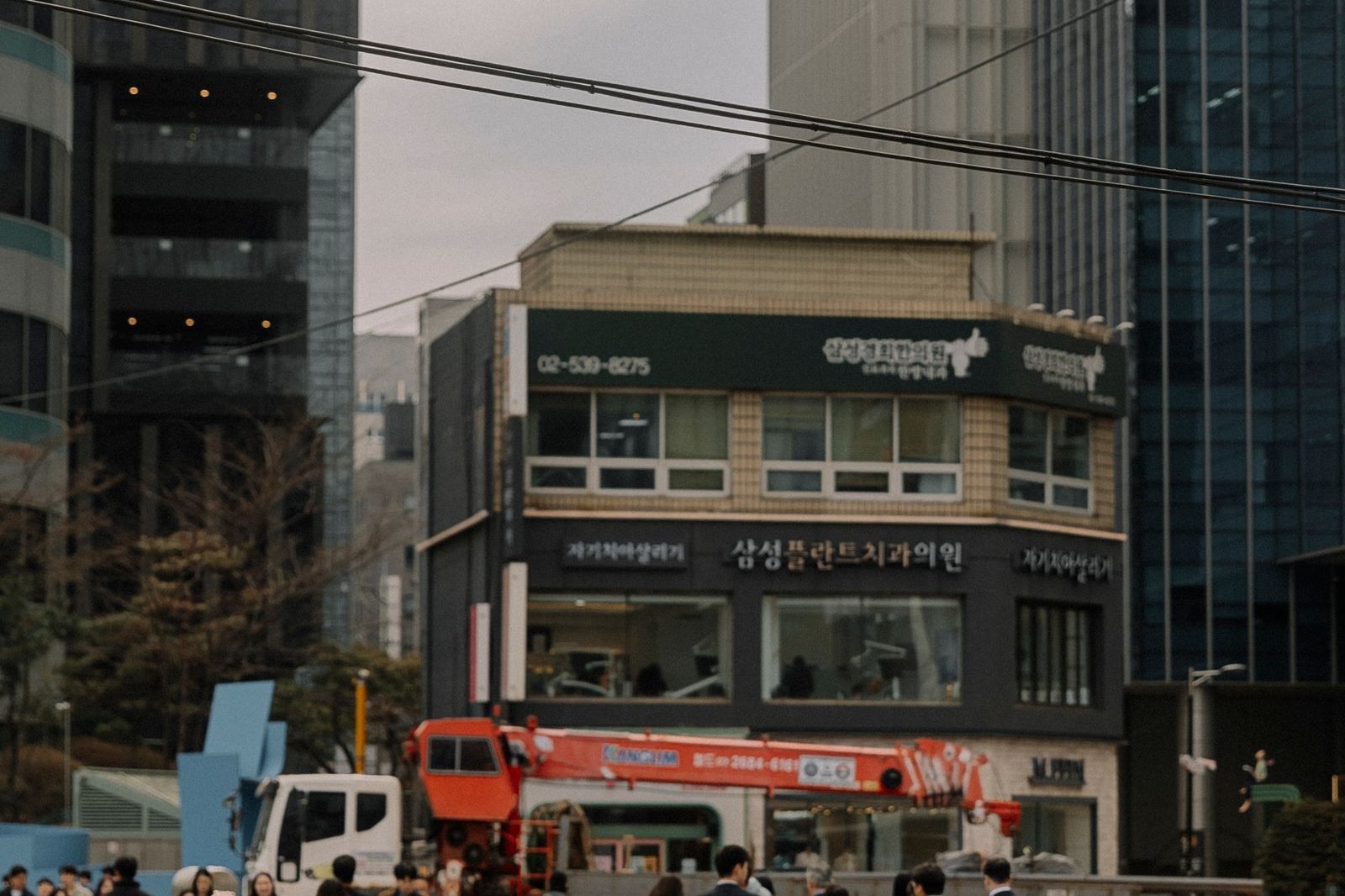
It’s 5:58 p.m. You’ve finished your work. Your bag is packed, mentally. Your coat is on, spiritually. But your body is still in the chair, because the team leader is still typing, and nobody on the team has moved.
5:59. Someone clears their throat. Someone else opens a spreadsheet they closed an hour ago.
6:00. The youngest person on the team stands up, says “먼저 들어가 보겠습니다!” (“I’ll be heading off first!”), bows slightly, and is gone before the echo fades. The rest of the office watches the door close like they’ve just seen someone walk on the moon.
That, in one move, is 칼퇴 (kal-toe): leaving work exactly on time. And the gap between that young worker and everyone still glued to their chairs tells you most of what you need to know about how Korean office life has changed.
The short version: 칼퇴 is short for 칼퇴근, “knife-sharp leaving”, walking out the second your hours end. For decades, many Korean offices ran on an unspoken rule that you didn’t leave before your boss, and long nights of 야근 (overtime) were treated as proof of loyalty. Since 2018 the law has capped the week at 52 hours, Korea’s annual working hours have dropped sharply, and a younger generation openly values 워라밸 (work-life balance). Today leaving on time is normal in many offices, a small act of courage in others, and still a live debate everywhere.
What 칼퇴 actually means
The full word is 칼퇴근 (kal-toe-geun). The Standard Korean Language Dictionary defines it as leaving work the moment quitting time arrives, without the slightest delay. 칼 means knife, and the idea is precision: cut clean at 6:00:00, no crumbs.
Most people just say 칼퇴. You’ll hear it everywhere:
- “오늘 칼퇴 가능?” (“Can you leave right on time today?”), usually sent to a friend before dinner plans
- “칼퇴 성공!” (“Successfully left on time!”), posted with the triumph of someone who just escaped a burning building
- “우리 팀은 칼퇴 분위기야” (“My team has an on-time vibe”), said about a job the way people describe a great apartment
Notice the words people use: possible, success, vibe. Leaving when your contract says you can leave is described like a lucky break. That tells you the history.
The old rule: never leave before the boss
For a long time, a lot of Korean workplaces ran on a rule that was never written anywhere. The boss leaves first. Then the seniors. Then you.
If you’ve read our guide to nunchi, you know Koreans have a whole word for reading the room. At 6 p.m., the room was saying a lot. Leaving while the team leader was still working could look like you didn’t care, or worse, like you had less work than everyone else. So people waited. They tidied their desktop. They answered an email that didn’t need answering. They developed a deep interest in fonts.
Korean office humor has a whole catalogue of tricks from this era, like the jacket left on the back of the chair, so that from across the room you look like you’ve just popped out to the restroom. For three hours.
Even the exit was a ritual, with its own phrase acknowledging everyone’s effort: see 수고하셨습니다 for why one sentence carries so much weight and why some people think juniors shouldn’t say it to a boss.
Say / Mean: 먼저 들어가 보겠습니다. (meon-jeo deu-reo-ga bo-get-seum-ni-da) literally says “I’ll go in first.” It means “I’m leaving before you, I know I’m leaving before you, and I’m being polite about it.” The word 먼저 (“first”) is doing all the work. It quietly admits that, in the old logic, leaving first was the thing that needed an apology.
야근: how overtime became a badge
야근 (ya-geun) is work done late into the night after quitting time, as the dictionary puts it. For the generation that built modern Korea, it wasn’t unusual. It was Tuesday.
The background is the country’s famous speed. As our ppalli-ppalli article explains, Korea’s fast-growth decades ran on export targets, tight deadlines and very long hours. Long hours became more than a necessity; they became a way to show commitment. The fluorescent lights of an office tower at 10 p.m. were, for a while, a kind of national skyline.
Ask Koreans about this era and you’ll hear the same list: dinner delivered to the office, the “quick meeting” at 5:50, and the 회식 that turned a workday into a work-night.
And at home, the family group chat had its own genre. Picture a mom’s KakaoTalk at 9:47 p.m.: “아들 밥은 먹었어? 또 야근이야? 회사가 너 없으면 망하니?” (“Son, did you eat? Overtime again? Will the company collapse without you?”) No one has ever answered that last question honestly.
The bosses of today were often the juniors of that era. Many of them stayed late because their bosses did, and their bosses stayed late because the country was racing to catch up. When a manager now says “우리 때는 말이야…” (“Back in my day…”), this is usually the day they mean. (If that sentence makes you twitch, you need our guide to the kkondae.)
The numbers: from world-class long hours to “only” sixth
Korea changed faster than its reputation did.
According to OECD figures reported by the Chosun Ilbo in July 2026:
| Year | Korea’s average annual hours worked per worker |
|---|---|
| 2010 | 2,163 |
| 2018 | 1,992 (first time below 2,000) |
| 2024 | 1,865 |
| 2025 | 1,833 |
In 2017, Korea had the second-longest hours in the OECD, behind only Mexico. By 2025 it had dropped to sixth, behind Mexico, Costa Rica, Chile, Greece and Israel. The paper credited the settled five-day week and the 52-hour cap, along with an office culture that has shifted from treating 야근 as a given to valuing 워라밸.
Before anyone throws a party, though: Korea still worked 97 hours more than the 2025 OECD average of 1,736. That’s 235 hours more than Japan and about 500 more than Germany, which has the shortest hours in the OECD. In other words, Korea moved from “legendary” to merely “long”. Progress.
The 52-hour week: when the law joined the conversation
The big legal turning point came in 2018. Korea capped the working week at 52 hours: 40 regular hours plus a maximum of 12 hours of overtime. It came in stages:
- July 1, 2018: workplaces with 300 or more employees, plus central and local government and public institutions
- January 1, 2020: workplaces with 50 to 299 employees
- July 1, 2021: workplaces with 5 to 49 employees
The cap didn’t turn every office into a 6 p.m. ghost town, but staying late was no longer just loyalty. It was something the company had to count. For a lot of workers, the most powerful sentence in the office became “주 52시간 넘어요” (“That would go over 52 hours this week”). It’s hard to argue with arithmetic.
2023: the “69-hour week” that the MZ generation shut down
If you want to see how much Korean attitudes had shifted, look at March 2023.
On March 6, 2023, the Ministry of Employment and Labor gave notice of a bill that would let labor and management manage overtime by the month or even the year, instead of strictly by the week. The government pitched it as “work intensively, then rest in a block.” But the math the public noticed was the maximum: on a six-day schedule, a worker could legally hit 69 hours in a single week (80.5 on a seven-day schedule), as long as the average stayed within limits.
The reaction was fierce, and a lot of it came from exactly the people the government had hoped would welcome flexibility. On March 9, the 새로고침노동자협의회, a coalition of eight young-led unions including an office workers’ union at LG Electronics, came out against it. Korean comment sections did what Korean comment sections do, which is turn a policy into a punchline in about fifteen minutes. The number 69 became shorthand for an entire generation’s “absolutely not.”
On March 14, President Yoon Suk Yeol ordered the plan to be reviewed, telling officials to listen carefully to workers’ views, “especially those of the MZ generation.” Then on November 13, 2023, after a face-to-face survey of 6,030 workers, employers and citizens, the ministry announced it would keep the 52-hour framework and look at changes only for certain industries and jobs, through talks between unions, employers and the government. The 69-hour week, as a nationwide idea, was over.
워라밸 and the MZ generation
워라밸 (wo-ra-bael) is Korean for “work-life balance”, squeezed into three syllables the way Koreans squeeze everything (see also: 아아, iced Americano). It is now one of the first things young job seekers ask about, right next to salary.
The “MZ generation” is the Korean label for Millennials and Gen Z lumped together, roughly people born from the early 1980s to the 2000s. It’s a blunt label, but it frames nearly every office debate, and three are worth knowing.
조용한 퇴사: quiet quitting
조용한 퇴사 (jo-yong-han toe-sa) is the Korean translation of “quiet quitting”: staying in your job, but doing only what’s required, no more. No extra projects, no staying late to look keen, no volunteering at the meeting.
In a 2024 survey by the job platform Incruit, 51.7% of 1,097 workers said they were currently quietly quitting. The top reason was dissatisfaction with pay and benefits (32.6%), followed by a lack of enthusiasm for work itself (29.8%) and preparing to change jobs (20.5%). And 65.8% said they felt positive about a coworker doing it.
Here’s the twist that makes this survey fun: the group most likely to say yes wasn’t fresh recruits. It was people 8 to 10 years into their careers (57.4%). So before anyone blames “kids these days,” the quietest quitters may be sitting a few desks closer to the window.
The AirPods debate
If you want to start an argument in a Korean office, you don’t need politics. You need one pair of wireless earbuds.
In late 2022, the SNL Korea sketch series “MZ Office” on Coupang Play featured a new hire who works with AirPods in. When told to take them out, she says she isn’t listening to music, she just feels more settled with them in. Her slightly older colleague negotiates a compromise: one ear only. The clip spread everywhere, and as the Hankyung reported, online reactions mostly agreed that both ears in during work hours was too much, while plenty of people asked themselves whether thinking so made them a 젊은 꼰대 (young kkondae). Earlier that year, a clip of the entertainer DinDin saying he just couldn’t understand working with AirPods in had already set off the same “that’s fine” vs “I don’t get it” debate.
The fight is never really about earbuds. It’s the old 6 p.m. standoff about being visibly part of the team, wearing a different accessory.
Early resignations
The other worry managers voice constantly is that young hires leave fast. In a 2025 Incruit survey of 446 HR managers, the most common answer for how long departing new hires had stayed was one to three years (60.9%). HR managers’ top guess at why: the job wasn’t the right fit (58.9%), followed by low pay (42.5%), company culture (26.6%), relationships with bosses and colleagues (23.4%) and a lack of work-life balance (17.1%). And 80.5% said early departures hurt the mood of the team.
That last number is the quiet part said out loud. When young people leave, the people who stay pick up the work, which means more 야근, which makes the next young person more likely to leave. Korean HR has a name for this kind of loop: Monday.
The 4.5-day week: Friday afternoons off
The newest chapter is the push to cut hours further, not just cap them.
Gyeonggi Province went first among local governments. In March 2025 it called for small and medium companies (5 to 299 employees) to join a 4.5-day week pilot, offering subsidies to make up the wages for the shorter hours, plus consulting.
Then the national government stepped in. In 2026 the Ministry of Employment and Labor launched the “Work-Life Balance +4.5 Project” (워라밸+4.5 프로젝트), which supports companies that cut actual working hours, such as moving to a 4.5-day week, by labor-management agreement and without cutting pay. By the end of June 2026, 224 companies had joined, beating the first-year target of 220, and 67.9% of them had fewer than 50 employees. The formats vary: some take every Friday afternoon off, some do a 38-hour week, some cut an hour every day for a 35-hour week.
So the Korean office dream has moved on. A decade ago, it was 칼퇴. Now some people are aiming for Friday at 1 p.m., which is a 칼퇴 with a three-day weekend attached.
Say / Mean: “오늘 금요일 오후 반차야.” (o-neul geu-myo-il o-hu ban-cha-ya) says “I’m taking Friday afternoon as a half day.” Among office workers it means “I am, briefly, the happiest person in Korea, and I will not be answering KakaoTalk.”
So, can you 칼퇴?
Usually, yes. In a lot of Korean workplaces today, especially big companies, startups and younger teams, leaving on time is completely normal, and nobody will blink. But offices vary enormously, and some teams still carry the old instincts. Here’s how to handle it gracefully.
Read the first few weeks. Watch what time people actually leave, and whether the team leader seems to care. This is nunchi in its natural habitat.
Finish visibly. Wrap up anything your team is waiting on before 6. 칼퇴 lands best when nobody is left holding your half of the task.
Say the line. Don’t vanish silently. A quick “먼저 들어가 보겠습니다” or “내일 뵙겠습니다” (“See you tomorrow”) to your team, with a small nod, turns leaving into a polite goodbye instead of an escape.
If something’s urgent, ask once. “혹시 오늘 제가 더 도와드릴 일 있을까요?” (“Is there anything else I can help with today?”) at 5:45 shows goodwill. If the answer is no, believe it and go.
Common mistakes
- Assuming every office runs on the old rules. Many don’t. Watch before you wait.
- Assuming every office runs on the new rules. Some still do quietly notice who leaves first. Watch before you sprint.
- The silent exit. Leaving on time is fine. Leaving without a word can read as cold.
- Judging by generation. The new hire might stay late by choice, and the manager might be the one sprinting to the elevator at 6:01 to make their kid’s recital.
The old Korea measured dedication in hours. The new Korea is, slowly and loudly, learning to measure it in results. Somewhere in between sits a team leader at 5:59 p.m., looking at the clock, deciding whether to stand up first so everyone else can go home. More and more of them are doing exactly that. And that might be the biggest office culture change of all.