Friends & Social Life · 존댓말 · 11 min read
Why did my Korean friend suddenly switch to 존댓말? How to read the polite-speech plot twist
When a Korean friend or partner who speaks 반말 with you suddenly goes polite, it can mean anger, sarcasm, a joke, a boss or parent in the room, a formal setting or just a texting habit. Here's how to tell which one, and what to say back.
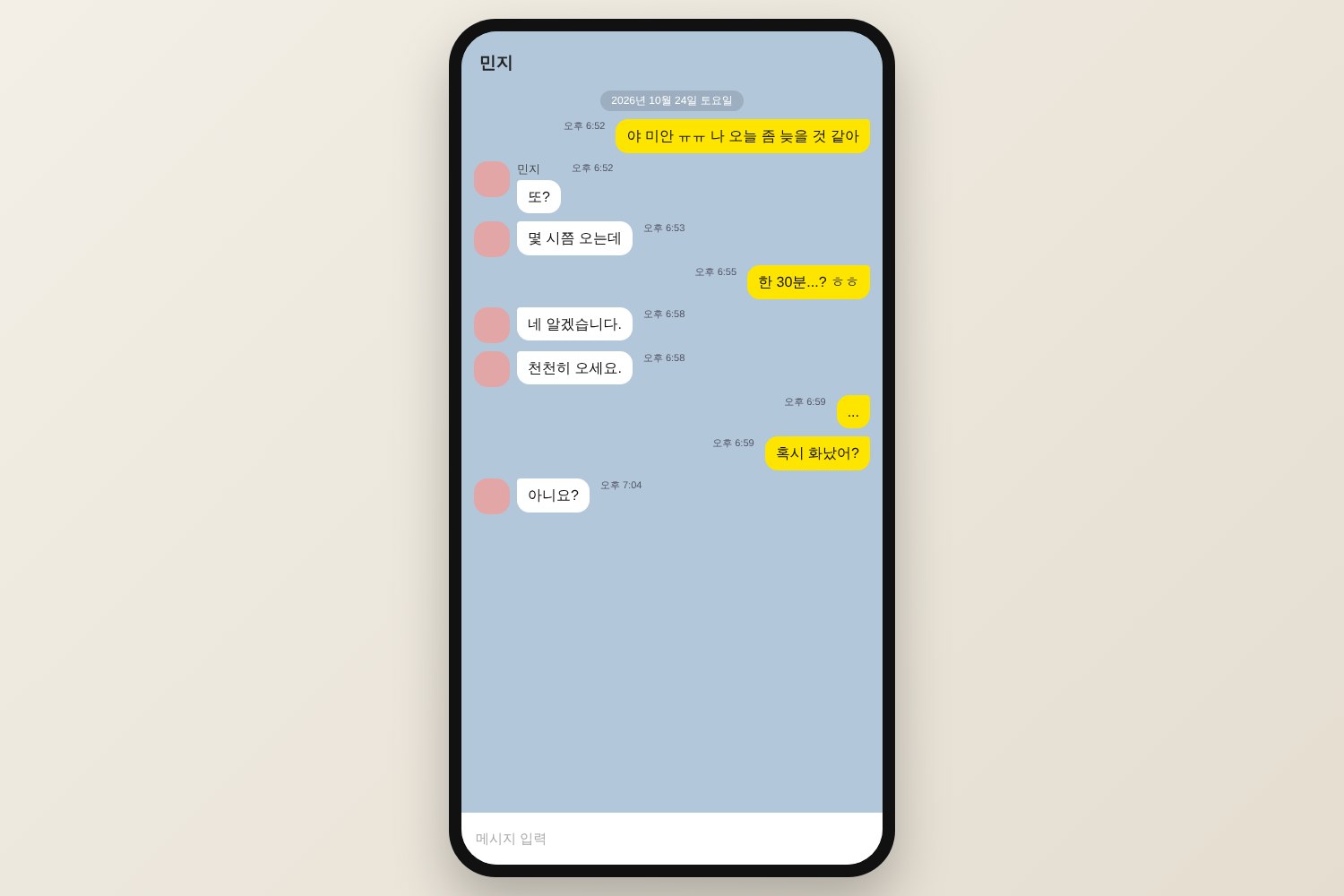
You’ve been friends for two years. You’ve seen each other’s worst karaoke. Your whole friendship runs on 반말, casual speech: “야, 뭐 해?” (“Hey, what are you doing?”), “ㅋㅋㅋㅋ 미쳤다” (“LOL that’s insane”).
Then you cancel dinner for the second time this month, and this arrives on KakaoTalk:
“네, 알겠습니다. 바쁘신가 봐요.” (“Yes, understood. You must be busy.”)
Every syllable is polite. Every syllable is also an ice cube going down your back. You read it four times and consider moving to another country, then remember you already did.
Welcome to one of the most powerful moves in Korean: the sudden switch back to 존댓말 (jon-daen-mal), polite speech.
The short version: when someone who normally speaks 반말 with you suddenly goes polite, it usually means one of six things. They’re upset and putting distance between you (the most common reason, and the scariest). They’re being sarcastic. They’re joking around. Someone higher-ranking is in the room, like their boss or their parents. You’re in a public or formal setting where casual speech would look wrong. Or it’s just how they text when typing fast. Read the context, the tone and who else is present. If you still can’t tell, ask, gently: “왜 갑자기 존댓말이야?” (“Why the sudden polite speech?”)
For when casual speech is allowed in the first place, see when it’s OK to speak 반말. This is about the reverse: the door swinging shut.
Why polite speech can feel like a slap
In most languages, extra politeness is nice. In Korean, from a friend, it can sting, and the reason is built into the grammar.
The Standard Korean Language Dictionary defines 존댓말 simply as speech that raises up a person or thing, the same as 높임말, “elevated speech”. Elevating someone also sets them at a distance. You raise strangers, elders and customers. You don’t raise the person you split 떡볶이 with at 2 a.m.
Dropping formality said we’re close now. Going back to polite speech un-says it, like a friend who always hugs you suddenly offering a firm handshake and calling you “Mr. Smith”.
Korean even has two levels of politeness to deploy. The Standard Korean Language Dictionary describes 해요체 (-요 endings, like “알겠어요”) as the everyday informal polite style, and 하십시오체 (-습니다 endings, like “알겠습니다”) as the style that raises the listener the most, the language of news anchors, job interviews and the military. Remember that difference. It will matter a lot in a minute.
Reason 1: they’re angry, and this is the cold front
This is the one everybody fears, with good reason. When a close friend or partner is hurt or angry, polite speech is a way to signal I’m stepping back from you without saying a single rude word. It’s a very Korean kind of anger: indirect, deniable and devastating. (For more on how Koreans say things without saying them, see why Koreans don’t say no.)
Typical signs:
- Short, formal replies. “네.” (“Yes.”) “알겠습니다.” (“Understood.”) “괜찮습니다.” (“It’s fine.”) Nothing else.
- The 하십시오체 upgrade. Jumping straight to -습니다 with someone you usually talk to in 반말 is the speech equivalent of putting on a suit to break up with someone.
- A title out of nowhere. Calling you “OO 씨” (your name plus -ssi) when they normally use your name or a nickname.
- No ㅋㅋ, no emoji, no stickers. The KakaoTalk emoticon drawer has gone dark. In a friendship that ran on ㅋㅋㅋ, a message with zero ㅋ is a weather warning.
Cue you scrolling back through the chat like a drama detective at a corkboard of red string. Usually it’s something you didn’t do: a reply you forgot, a promise you broke, a joke that landed badly in front of others.
Say / Mean: “네, 알겠습니다. 편하실 때 연락 주세요.” (“Yes, understood. Contact me whenever it’s convenient for you.”) from someone who usually texts you in 반말 means “I’m upset, I’m not going to tell you why, and you’d better figure it out.” Don’t reply in matching formal speech. Reply to the switch.
Reason 2: sarcasm, served chilled
Close cousin of anger: sarcasm. Here polite speech is used as a weapon of exaggerated respect. It’s usually 해요체 or a fancy honorific verb, delivered with a raised eyebrow.
You show up 40 minutes late. Your friend looks at their watch and says:
“오셨어요? 바쁘신 분이 여기까지 와 주시고.” (“Oh, you’ve arrived? How kind of such a busy person to come all the way here.”)
That -시- honorific on “come” and “busy” is respect usually saved for a teacher or grandparent. The message is: you’re acting like a VIP, so I’ll treat you like one.
Sarcastic 존댓말 is spoken, theatrical and comes with a look. It means they’re annoyed but still talking to you, which is good news. A sarcastic friend is still a friend. A cold one has left the building.
Reason 3: they’re just messing with you
Now the good one. Plenty of Korean friends switch to over-the-top polite speech purely for fun. It’s a whole comedy register.
- You buy the drinks, and your friend bows and says “감사합니다, 사장님!” (“Thank you, boss!”)
- You make a ridiculous suggestion, and they answer like a butler: “네, 분부대로 하겠습니다.” (“Yes, I shall do as you command.”) 분부 is the kind of word you hear servants use in historical dramas, right before the evil minister reveals his plan.
Joking 존댓말 almost always comes with signals: a grin, ㅋㅋ or ㅎㅎ attached, an emoji, an absurd level of politeness, or a word nobody uses in real life. If you see “넵 알겠습니다 ㅋㅋㅋ”, the ㅋㅋㅋ is doing all the work. It cancels out the formality like a laugh track.
The easiest way to respond is to play along. “그래, 수고했다.” (“Yes, good work, you may go.”) Answering a fake butler with fake royalty is peak friendship.
Reason 4: someone more important just walked in
Sometimes the switch has nothing to do with you. It’s about who else is listening.
Picture this. You and your friend both work at the same company. In the break room you talk like old friends. Then your team leader walks over, and your friend suddenly says “OO 씨, 그 자료 보내 주셨어요?” (“Did you send that file, OO?”) in perfect office voice. Your friend hasn’t fallen out with you. They’re performing 공사 구분 (keeping work and personal separate). In many Korean workplaces, speaking 반말 to a colleague in front of a manager looks unprofessional, or as if the two of you are a little clique.
The same thing happens with family. Your partner speaks 반말 with you every day, but in front of their parents they may suddenly switch to polite speech with you, or at least soften everything. Parents of an older generation can find a couple’s casual talk too intimate or a little disrespectful, especially at a first meeting. (Our guide to meeting your Korean partner’s parents covers that whole performance.)
Korean grammar even has a related rule, 압존법 (ap-jon-beop), which the dictionary defines as toning down your respect for one person because the listener ranks higher still. Same instinct: speech is calibrated to everyone within earshot, not just the person you’re addressing.
How to tell: look around. If there’s a boss, a parent, a professor, a client or a much older person in the room, that’s almost certainly the reason. Watch what happens once the boss leaves. If your friend instantly goes back to “야, 아까 봤어? ㅋㅋ” (“Hey, did you see that earlier? LOL”), you have your answer.
Reason 5: it’s a formal occasion
A related case: the setting itself requires it. The Encyclopedia of Korean Culture describes Korean listener honorifics as falling into formal styles, used in situations that call for courtesy and ceremony, and informal styles used between people close enough not to stand on ceremony. When the situation turns ceremonial, even close friends switch.
You’ll see this when:
- Your friend is the MC at a wedding, and announces “신랑 입장이 있겠습니다” (“The groom will now enter”) and then calls you up with “OO 님, 앞으로 나와 주시기 바랍니다” (“OO, please come to the front”).
- You present together at school or work, and your classmate says “다음은 제 동료가 설명드리겠습니다” (“Next, my colleague will explain”) about you.
- Your friend is serving you at their job. Order from a friend who works at a café and you may get “주문하시겠어요?” (“Are you ready to order?”) with a perfectly straight face, because the manager is watching and the customer behind you is real.
None of this is about your relationship. Expect them to switch back the moment the microphone is off.
Reason 6: it’s just how they text
Then there’s the most boring explanation, which is also often the right one. Some Koreans text in a slightly more polite register than they speak, or have habits that look formal on screen.
- “넵” and “네” are extremely common quick replies, including among friends, especially for people who spend all day writing “넵!” in work chats. Their thumbs are on autopilot. (The KakaoTalk group chat guide explains why “네, 알겠습니다!” is practically a reflex in Korea.)
- People who switched to 반말 recently often slide back into -요 when they’re tired, rushed or typing on the subway, purely out of habit. Breaking years of polite speech takes time.
- Some people are just formal texters, chatting in 반말 and texting like a letter from the bank.
The giveaway is consistency. If they always do it, or do it with everyone, it’s a habit. If it appears suddenly, right after something happened between you, it isn’t.
The couple fight: when “~하세요” enters the room
Now the most dramatic setting of all: a couple in an argument.
It’s a drama staple, and real life too. Two people who’ve used 반말 for years start fighting, and one of them suddenly switches. “알아서 하세요.” (“Do whatever you like.”) “네, 그렇게 하세요.” (“Yes, go ahead and do that.”) “됐어요.” (“Forget it.”) The -세요 ending, which should sound respectful, lands like a door slammed in slow motion.
For a lot of couples, 존댓말 in an argument is the final stage of anger: past shouting, past sulking, all the way to icy courtesy. The unspoken rule many people joke about is that once your partner starts saying -요, it’s time to stop defending yourself and start apologizing. Korean comment sections under any couple-fight story tend to agree, usually with a lot of ㅋㅋㅋ and some genuine fear.
But here’s the twist: some couples use polite speech to prevent fights. In a 2014 survey by the Korea Population, Health and Welfare Association reported by the Seoul Shinmun, 6.2% of married respondents said they and their spouse used polite speech with each other, 32.8% said they mixed polite and casual depending on the situation, 5.4% said one used polite speech and the other didn’t, and 55.6% said they both used 반말. (The report didn’t give the sample size.) The same article described couples who’d adopted mutual 존댓말 specifically because casual speech kept escalating their arguments.
In 2024, the Munhwa Ilbo’s wedding column featured a same-age couple whose dating rules from day one were “use polite speech” and “no 야 or 너”, because they thought same-age couples could get careless with words, and they credited it with cutting down their fights. In 2018, a psychiatrist at Korea University Ansan Hospital, writing in Health Digest, recommended mutual polite speech in families for the same reason: it’s harder to explode at someone you’re grammatically respecting.
If 존댓말 is your agreed normal, it’s warmth. If it appears suddenly mid-argument, it’s a storm warning. Same ending, opposite meanings. Korean is fun like that.
How to read it: a quick decoder
| What you notice | Most likely meaning |
|---|---|
| Sudden -습니다, short replies, no emoji, right after you did something | Upset, putting distance between you |
| Fancy honorifics, raised eyebrow, spoken out loud | Sarcasm. Annoyed, but still engaging |
| Over-the-top politeness plus ㅋㅋ, ㅎㅎ or a grin | Joking. Play along |
| A boss, parent, client or elder is present | Performing for the audience |
| Wedding, presentation, their workplace, official chat | The setting requires it |
| They always text like this, or text everyone like this | Habit. Relax |
| Your partner says “알아서 하세요” mid-argument | Stop. Do not explain. Apologize first |
The three questions to ask yourself, in order: Who else is here? Did something just happen between us? Is there a laugh anywhere in the message? Those three answer most cases. The rest is nunchi, Korea’s art of reading the room.
What to do when it’s the cold one
If you’re fairly sure it’s the angry kind, here’s how to handle it.
1. Don’t match their formality. Replying “네, 알겠습니다” to “네, 알겠습니다” turns it into a standoff, two people bowing coldly at each other until one of them leaves the country. Stay in your usual 반말, warmly.
2. Name the switch, softly. The classic line is:
“왜 갑자기 존댓말이야? 무슨 일 있어?” (“Why the sudden polite speech? Did something happen?”)
Or, if you suspect you know the reason:
“나 때문에 서운했어? 미안해.” (“Did I upset you? I’m sorry.”)
서운하다 (seo-un-ha-da) is the perfect word here. It means feeling hurt or let down by someone close, softer than anger, and it gives the other person an easy way to admit what’s wrong.
3. Apologize for the specific thing, if you know it. A vague “sorry if I did anything” can make it worse, as if you can’t be bothered to work out what happened. “저번에도 약속 취소해서 미안해. 이번 주 토요일에 내가 밥 살게.” (“Sorry for canceling again. I’ll buy you dinner this Saturday.”) Food is the Korean peace treaty.
4. Watch for the thaw. You’ll know you’re forgiven when the 반말 comes back, usually alongside a sticker or a single “ㅋ”. Don’t point it out. Just enjoy it, like the first warm day after a Seoul winter.
When it’s not about you
If there’s a boss, parent or formal occasion involved, mirror them: polite in front of the team leader, following your partner’s lead at their mother’s table. Nobody minds you being slightly too polite in front of an elder; everyone notices the one person still using 반말. If it’s a joke, join in. If it’s a texting habit, ignore it.
Common mistakes
- Assuming every “네” is a crisis. Lots of people say “넵” forty times a day. Check the pattern, not one message.
- Fighting formality with formality. You’ll both freeze.
- Pointing out the switch in front of others. If your friend went polite because the boss is there, saying “왜 갑자기 존댓말 해? ㅋㅋ” in front of the boss undoes the whole performance and embarrasses them. Ask later.
- Over-explaining when your partner says “알아서 하세요”. It is not an invitation to present your side with supporting evidence.
The takeaway
In Korean, the politeness that shows respect to a stranger can show distance to a friend. Most of the time a sudden 존댓말 is harmless: a joke, a boss nearby, a wedding microphone or a tired thumb. Sometimes it’s a quiet alarm.
Either way, the fix is the same as for most things in Korea: read the room, don’t take the bait, and if in doubt, buy them a meal and say “미안해.” In casual speech, of course.